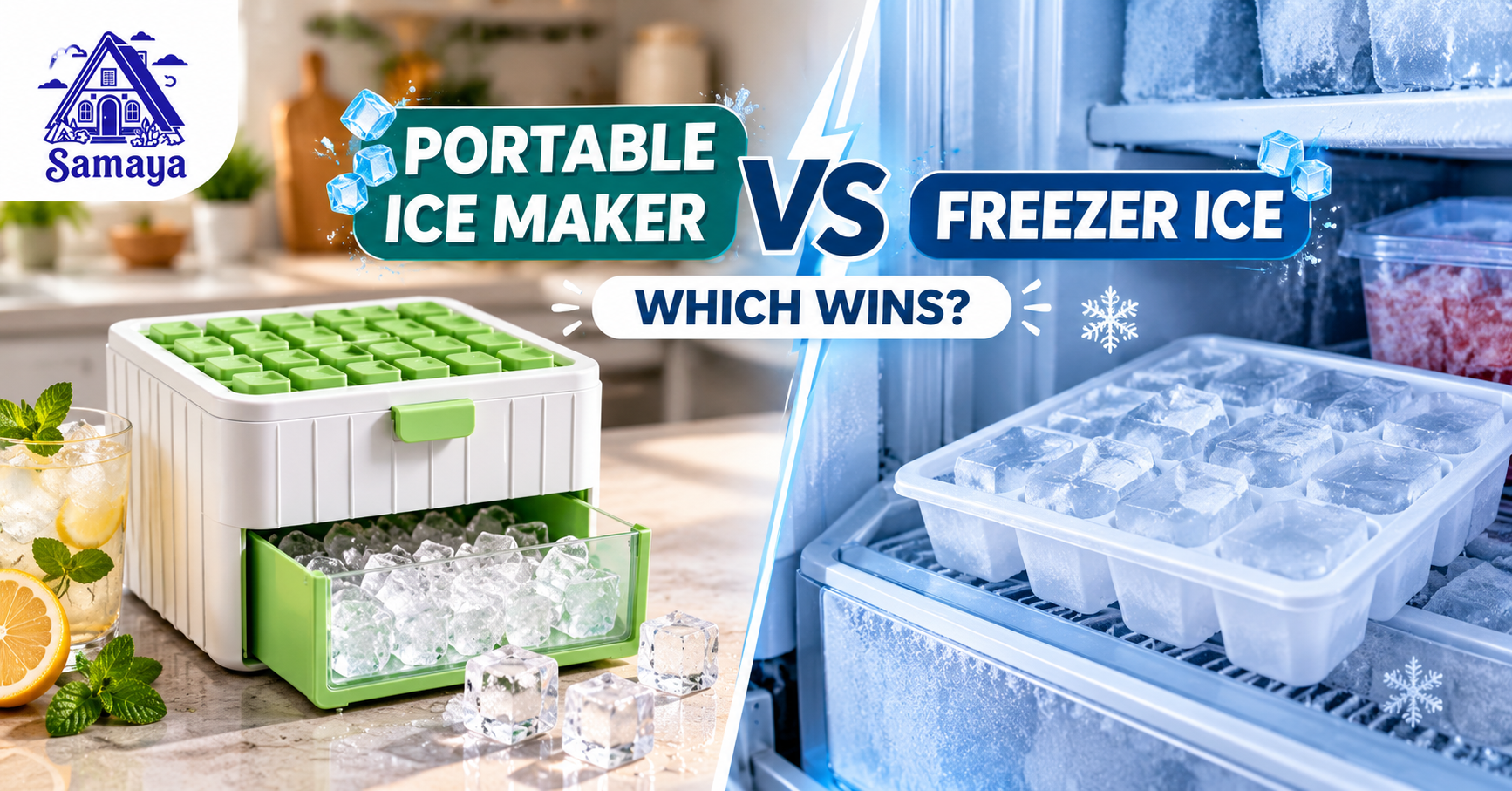
Portable Ice Maker vs Freezer Ice: Which Wins?
Nothing feels better than enjoying a chilled drink on a hot afternoon. Whether you’re preparing fresh juice, iced coffee, or cold beverages for guests, having enough ice available makes a difference.
But what happens when your freezer ice trays are empty just as visitors arrive?
That’s when many households start considering a portable ice maker.
If you’re wondering whether a portable ice maker or traditional freezer ice is the better choice, the answer depends on how frequently you need ice, how much storage space you have, and how much convenience matters to you.
In this guide, we’ll compare both options to help you decide what works best for your kitchen, office, or family gatherings.
What Is a Portable Ice Maker?
A portable ice maker is a compact appliance or ice-making accessory designed to make preparing and collecting ice more convenient.
Electric countertop ice makers use a cooling system to produce ice without requiring a traditional freezer tray. Many models can complete their first batch in several minutes, although the exact time depends on the machine.
Manual ice-making products work differently. They generally use a freezer to freeze water but make releasing and storing ice easier.
For example, Samaya Store offers a Portable Ice Maker Machine with Ice Drawer featuring a press-to-release tray and built-in storage drawer.
Its compact design makes it a practical option for organizing ice in a home kitchen without repeatedly twisting individual ice trays.
What Is Traditional Freezer Ice?
Traditional freezer ice is made by filling an ice cube tray with water and placing it inside your refrigerator’s freezer compartment.
Once the water freezes, you remove the cubes and transfer them into a glass, bowl, or storage container.
Freezer trays are inexpensive, simple to use, and suitable for everyday household needs.
However, preparing additional ice takes time, especially when you need multiple batches for family gatherings or parties.
Portable Ice Maker vs Freezer Ice: Quick Comparison
| Features | Electric Portable Ice Maker | Traditional Freezer Ice |
|---|---|---|
| Ice preparation | Often produces ice in minutes | Usually takes several hours |
| Convenience | Automated ice production | Manual filling and removal |
| Portability | Can be moved between suitable locations | Requires freezer access |
| Initial cost | Higher | Lower |
| Storage | Many models have temporary ice baskets | Ice stays frozen in the freezer |
| Maintenance | Regular cleaning required | Simple tray washing |
| Best for | Frequent ice use and gatherings | Occasional household use |
Note: A manual press-release ice tray, such as the design described on Samaya Store’s product page, still needs freezing time. It should not be confused with an electric countertop ice maker.
1. Ice-Making Speed: Which Is Faster?
Speed is one of the biggest differences between an electric portable ice maker and a conventional freezer tray.
Some electric countertop models can produce their first batch in approximately 6–15 minutes, depending on their design and operating conditions.
Traditional freezer trays typically need several hours to freeze completely. The exact time depends on water volume, tray material, and freezer temperature.
For households that frequently prepare cold drinks or welcome unexpected guests, an electric ice maker can offer a significant convenience advantage.
Winner: Electric portable ice maker, when rapid ice production is the priority.
2. Convenience and Everyday Use
Traditional ice trays are straightforward, but removing frozen cubes can sometimes be frustrating.
You may need to twist the tray, loosen the cubes, or transfer them into another container.
Modern ice-making accessories can simplify this process.
The portable ice maker with ice drawer from Samaya Store includes a press-to-release mechanism that helps transfer cubes into a built-in drawer.
This can make ice collection more convenient, especially when preparing several cold drinks.
Electric countertop models offer another level of convenience by producing ice automatically once filled and operated according to their instructions.
Winner: Portable ice-making solutions, for easier handling and reduced manual effort.
3. Storage Space: Which Is Better for Small Kitchens?
Kitchen space matters, particularly in apartments and compact homes.
Traditional freezer trays take up space inside the freezer, which may already contain frozen food, vegetables, and other essentials.
Countertop ice makers use kitchen counter space instead. This can free up freezer room, but the appliance itself needs a suitable location.
Compact manual ice-making containers can offer a middle ground by combining a tray and storage drawer.
Samaya Store’s listed product measures approximately 15 × 15 × 14 cm, making it a compact option
Winner: Depends on your available space. A compact ice tray is suitable for smaller budgets and kitchens, while a countertop machine may be preferable when freezer space is limited.
4. Cost: Which Option Saves More Money?
Traditional freezer ice trays are generally the most affordable choice because they do not require a separate ice-making appliance.
Electric portable ice makers usually have a higher purchase price and consume electricity during operation.
They can still be worthwhile for households that use ice frequently, particularly when convenience is more important than minimizing upfront costs.
Manual ice-making accessories offer another option. They can improve the process of collecting and storing cubes without the expense of an electric machine.
Before purchasing, consider how often you need ice and whether you would benefit from a separate appliance.
Winner: Traditional freezer trays, for the lowest upfront cost.
5. Which Is Better for Saudi Arabia’s Hot Weather?
In Saudi Arabia, chilled drinks are a regular part of everyday life, particularly during warmer months.
From family gatherings in Riyadh to weekend get-togethers in Jeddah and Dammam, preparing enough ice can be helpful when serving several guests.
An electric portable ice maker can be useful for frequent entertaining because it produces additional batches without relying on a conventional ice tray.
However, a freezer remains useful for keeping ice frozen until it is needed.
For smaller families, a compact tray with an integrated storage drawer may provide enough convenience without adding another electric appliance to the kitchen.
Winner: Electric portable ice maker for frequent gatherings; freezer trays for occasional use.
6. Cleaning and Maintenance
Both options need regular cleaning to keep ice preparation hygienic.
Traditional ice trays can generally be washed using mild dish soap and clean water.
Electric ice makers require more careful maintenance. Depending on the model, this may include draining water, cleaning internal components, and following the manufacturer’s descaling instructions.
For manual ice-making accessories, wash the tray and storage compartment according to the product’s care instructions.
Use potable water, avoid leaving standing water for extended periods, and ensure all food-contact surfaces are clean.
Winner: Traditional freezer trays, for simpler maintenance.
Which Option Should You Choose?
The right option depends on your daily routine.
Choose an electric portable ice maker if you frequently entertain guests, need ice throughout the day, or want automated ice production.
Choose traditional freezer trays if you only need a few cubes occasionally, have enough freezer space, and prefer an inexpensive solution.
Choose a compact press-release ice tray with storage if you want easier cube removal and better organization without purchasing a separate electric appliance.
For many households, convenience and available kitchen space are more important than having the fastest possible ice-making equipment.
Frequently Asked Questions
1. Is a portable ice maker better than freezer ice?
An electric portable ice maker is generally better for frequent, rapid ice production. Traditional freezer trays are more affordable and work well for occasional household use.
2. How long does a portable ice maker take to make ice?
Some electric countertop ice makers produce a first batch in approximately 6–15 minutes. Manual ice trays still require freezer time, often several hours.
3. Can a portable ice maker keep ice frozen?
Many electric countertop ice makers are designed to produce ice rather than store it frozen indefinitely. Unless the model includes refrigerated storage, unused ice may melt and need to be transferred to a freezer.
4. Is a portable ice maker useful for Saudi households?
Yes, particularly for households that regularly prepare cold drinks or entertain guests. The best choice depends on how often ice is needed and whether an electric machine or a manual ice tray is more suitable.
5. What makes an ice tray with a storage drawer useful?
A built-in drawer helps collect and organize ice cubes after release. It can reduce the need for separate containers and simplify preparing multiple drinks.
6. Does the Samaya Store portable ice maker require electricity?
The listed product describes food-grade plastic and silicone materials, a press-release tray, and a storage drawer. Its electrical specifications are not provided, so customers should confirm its operating method before purchasing.
Final Verdict: Portable Ice Maker or Freezer Ice?
There is no single winner for every household.
An electric portable ice maker wins when speed and frequent ice production are the main priorities. Traditional freezer trays win on affordability, simplicity, and long-term frozen storage.
For people who want an easier way to remove and organize ice cubes, a compact press-release tray with a storage drawer can be a useful alternative.
Explore the Portable Ice Maker Machine with Ice Drawer at Samaya Store and choose the option that best fits your everyday needs.